FOUNDATIONAL
Thinking Lab
Playful explorations. Serious ideas.
The Foundational Thinking Lab is an initiative dedicated to interdisciplinary learning and computational inquiry. It brings together intrinsically motivated individuals from a range of industries to reason from first principles, debate theories, and build models. In addition to virtual courses and sessions, The Lab hosts in-person retreats, providing an opportunity to connect with peers and engage with some of the most influential and original thinkers of our time.
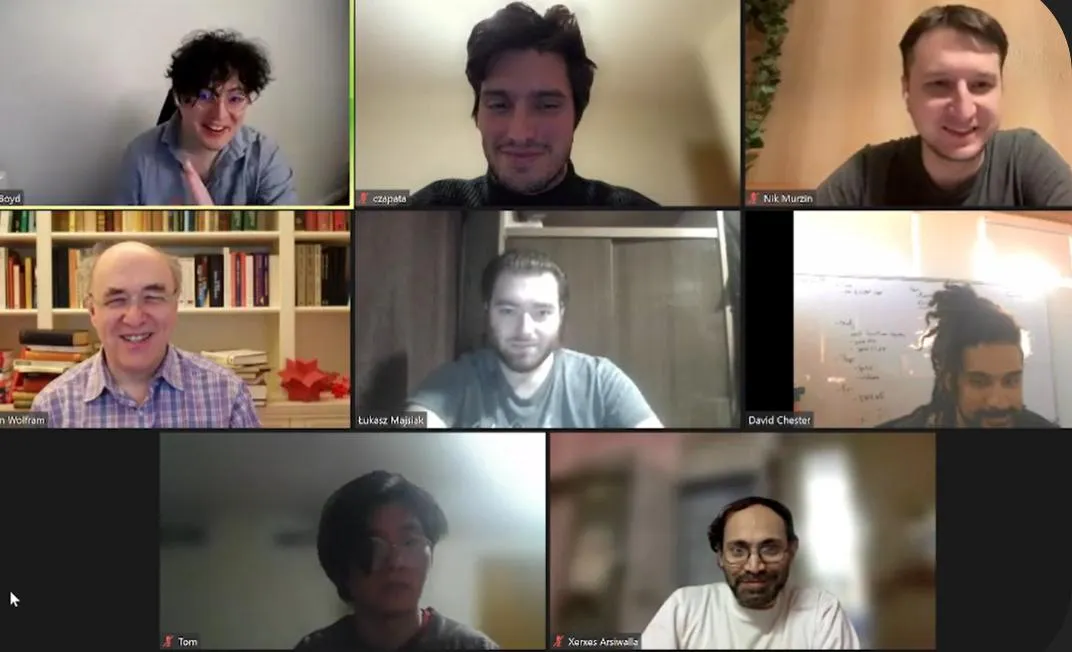
Stephen Wolfram, creator of Mathematica, Wolfram|Alpha, and the Wolfram Language, author of A New Kind of Science, and founder of the Wolfram Physics Project
Who It Is For
Designed for professionals
from diverse industries
The Lab offers recreational intellectual engagement for busy professionals and knowledge seekers, combining depth, originality, and playfulness. Most join simply for the joy of exploring fascinating, sometimes esoteric questions, and to connect with others, who value discovery for its own sake.
Participants often come from one of the following backgrounds:

Curious Professional
“I miss the kind of thinking I used to do in college.”
A mid-career individual in tech, finance, consulting, law, healthcare, or creative industries. Loves learning but finds MOOCs too passive and grad school too rigid. Values engaging discussions, accessible mentorship, and flexible learning options.

Knowledge Collector
“I want to connect the dots between fields and produce something original.”
A polymath or autodidact who hops between disciplines. Already consumes dense educational content from many sources, attends salons, and reads philosophy for fun. Values depth, novelty, interdisciplinarity.
Executive Explorer
“I’m looking for my next tribe.”
A founder or seasoned professional in a thought-leadership position. Looking for a peer group for interdisciplinary dialogue and insight.
What We Do
Virtual courses led by expert mentors
Our courses emphasize curiosity-driven, exploratory learning anchored in the computational approach and first-principles thinking. For each subject we study, we trace its origins, consider alternatives, and envision possible futures. Origins are often reveal the accidents of history. Imagining alternatives sparks critical and creative inquiry. And considering potential futures may guide choices in the present. Each course is an intellectual adventure designed not only to introduce a subject but to turn ideas into original, creative output. Our mentors include researchers, inventors, and popular educators who genuinely enjoy teaching and make learning playful, engaging, and fun.
What to Expect
An exciting intellectual journey
A small cohort of 6–8 participants embarks on a 12-week journey that includes lectures, guest talks, group discussions, and collaborative project work. Along the way, they take detours into history and philosophy, adding depth and perspective to the main theme. Most explorations include a computational component.
The term culminates with a retreat at an inspiring global location, where participants, mentors, and special guests connect in person and engage in informal discussions, often into early morning hours.

Mount Washington in New Hampshire
Site of the landmark Rossi-Hall experiment that confirmed time dilation.
(Credit: Philip Scalia/Alamy)

Admission Requirements
Admission is selective and based on an interview.
We welcome participants with an undergraduate level of general knowledge. We do not expect domain-specific knowledge. The Wolfram Language is our computational tool of choice, as it naturally supports idea-driven exploration. Prior coding or Wolfram Language experience is not necessary. Stephen Wolfram’s introduction to computational thinking and the Wolfram Language can be found here: How to Teach Computational Thinking
Courses
Cross-Disciplinary Foundational Learning
Rolling admission with flexible start dates throughout the year
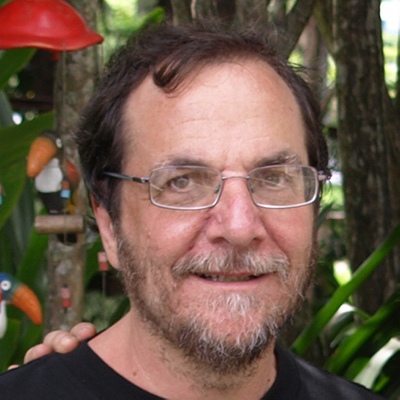
Computer Scientist and Creative Technologist
Astronomy
A Brief History of Calendars
Join us on the adventure of inventing a new calendar, one that may be whimsical, practical, or revolutionary. This course takes you beyond the familiar grid of the Gregorian calendar into the bigger story of how it came to be, the radical alternatives that have been tried, and the possibilities for calendars better suited for modern times.
We will use a combination of historical research and computational model making.

Financial Markets and Bank Treasury professional
Heterodox Economics
The Science of Money
What is money, really? A social contract, a state monopoly, a representation of value, or a collective hallucination? If we were to design a monetary system on Mars, would we choose a commodity standard, fiat currency, or decentralized crypto? And in a post-labor society, would we still need money?
In this course, we will explore mainstream and heterodox economic ideas side-by-side, challenging assumptions and critically assessing arguments. Through a blend of lecture and guided discussion, you will learn how modern banking creates money and evaluate debates around national debt, gold standard, trade tariffs, and crypto currencies. By the end of the course, you will have a rigorous mental model of how money works, allowing you to navigate personal finances more intelligently and assess economic claims made by politicians.
As a project, we will consider what a minimal computational model of an economy might look like, one that enables experimentation and insight.
Philosopher and Logician
Philosophy
Logic, Proof, and Understanding
Are logic and mathematics human inventions, or something we’ve
discovered? Philosophers have debated the issue for centuries, with no definitive answer. We’ll take a different approach, by investigating simple axiom systems and ask, how typical are they in the space of possible systems? Are they the ones we’d expect to discover in nature?
To investigate these questions, we’ll ask: What is logic? How can we develop new axiom systems, and what’s their point? We’ll use computational techniques to investigate as a group how different systems work. Some of these computational proofs grow very large. We’ll reflect on this and ask, does it matter if we can’t understand what the proofs are telling us?

Deep Learning and Natural Language Processing
COMPUTER SCIENCE
AI from First Principles to Practice
Artificial intelligence is moving fast, but the principles behind it are simple enough to learn, test, and use. This course is about turning that simplicity into power. We ask what today’s models can and cannot do, and then we try it ourselves.
You will learn how to get models to answer, to argue, to draw, to sing, to film, to play. You will see where they shine, where they stumble, and how to chain them together into something sturdier than a single prompt. Each week is a mix of short talk, live build, and peer critique. By the end, you will have two things: a computational essay that tracks your thinking, and a working artifact that shows it. It might be a workflow, an agent, an app, a demo, a short film, a song. Whatever it is, it will be yours, and it will work.
Ready to explore new ideas?
Find the adventure right for you!